‘Joseph O’Connor’s historical novel MY FATHER’S HOUSE manages to be at once a ripping yarn and a profound exploration of moral choices in the worst of times… With lyrical evocation of time and place, scabrous humour and heart-stopping tension, it combines the pleasures of the ideal holiday read with those of a literary masterpiece.’ – Fintan O’Toole, The Irish Times, ‘The Best Books of 2023 so far’
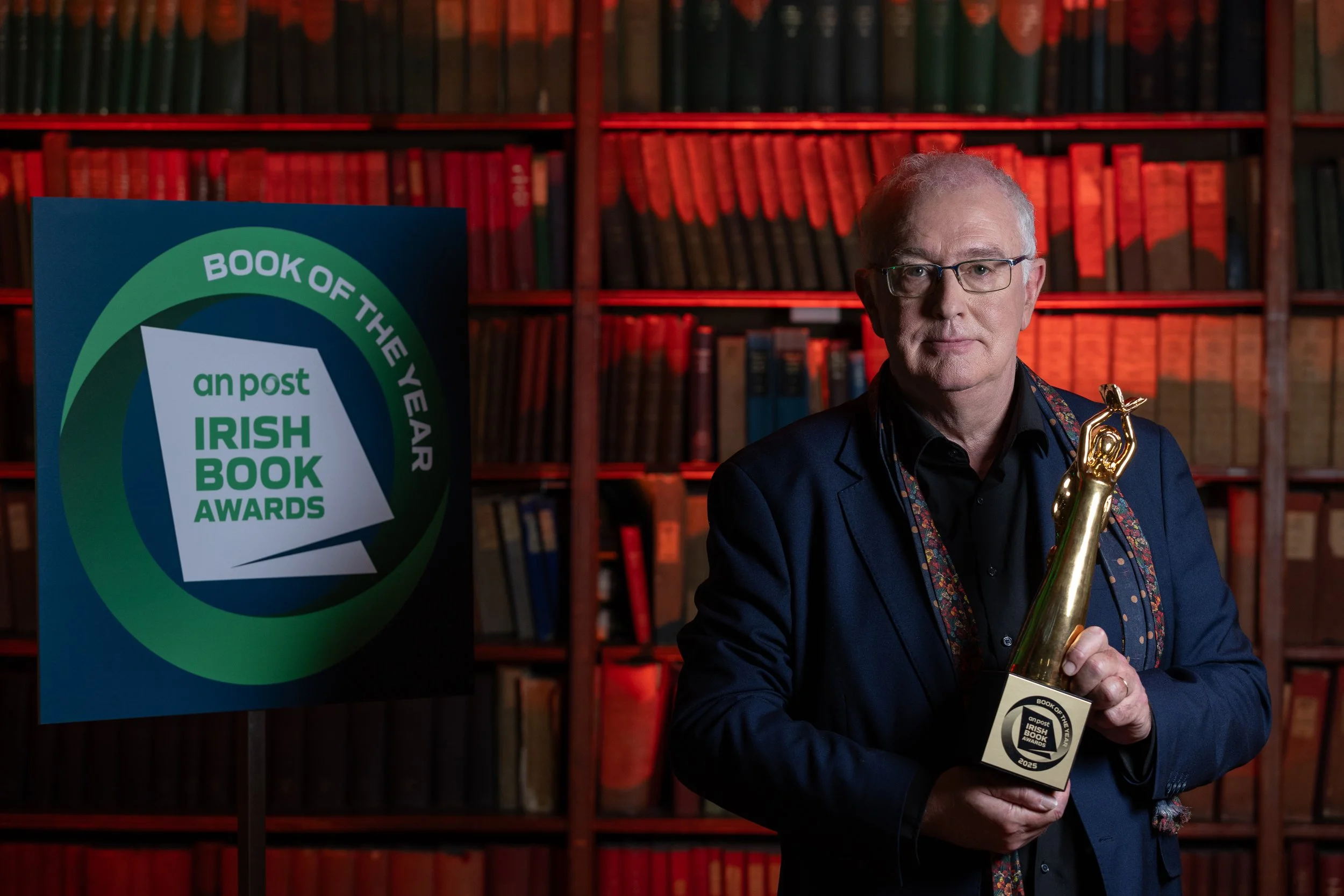
‘Joseph O’Connor’s SHADOWPLAY won novel of the year at the 2019 Irish book awards and was shortlisted for the Costa Novel award. He also writes stage and screenplays, short stories, nonfiction and radio diaries. This formidable talent for writing across genres is reflected in his masterly 10th novel, which should reap similar plaudits… This is a literary thriller of the highest order. The incarnation of O’Flaherty, the Irish Oskar Schindler, is sublime. What often elevates a writer is compassion, and O’Connor has it in spades – paying tribute to the courage of those who resist tyranny. Beautifully crafted, his razor-sharp dialogue is to be savoured, and he employs dark humour to great effect. The plot twists keep on coming until the novel’s coda, where a final joyful conceit is revealed.’ – Lucy Popescu, The Observer
‘MY FATHER’S HOUSE is a masterwork. No writer in the world can tell a story the way Joseph O’Connor does. He can, without seeming effort, be all things to all readers, taking us by the hand and guiding us into the very heart of a story, his narrative techniques deployed with such unearthly skill that we're hardly aware that this was written at all, it feels so real, so urgent, so incredibly alive. This novel is a searing and beautiful example of storytelling’s infinite importance, to our humanness, to our chances of learning from our most terrible and our most transcendent moments, and all our moments in between, to hold all life sacred, to see each other as brothers and sisters, to love and protect each other. No wonder he is so cherished and loved by his countless devotees across the earth. He is a national and international treasure, the most generous and noble of writers, a true master of the art.’ – Donal Ryan
‘THE GHOSTS OF ROME, Joseph O’Connor’s second novel in his projected trilogy about Rome under Nazi occupation, blazes with the imaginative flair and narrative energy that won its predecessor, MY FATHER’S HOUSE, high acclaim… There’s no slackening of tension, though, in the gripping account of wartime heroism, risk and resourcefulness this book continues. Jeopardy quivers through it… . The ugly stratum of Nazi oppression O’Connor’s novel graphically resurrects is packed with sensuously evoked reminders of Rome's rich past in this haunted and haunting novel.’ – Peter Kemp, The Sunday Times
‘The Choir’s attempts to rescue a grievously wounded Polish airman right under the nose of Gestapo commander Paul Hauptmann, who has been warned of the Fuhrer’s “intense displeasure” at his failure to eradicate the Escape Line, have a nail-bitingly tense “real time” feel to them. BBC interviews from the 1960s with former Choir members and fragments of an unpublished memoir give historical perspective and added pathos to this vivid and moving story, with O’Connor seamlessly combining real characters with imagined ones.’ – Laura Wilson, The Guardian, ‘The best recent crime and thrillers’
‘O’Connor has often been likened to the great Irish modernists for the lyricism of his voice-driven novels. But THE GHOSTS OF ROME also situates him within a broader European tradition of memory and moral reckoning, one that returns again and again to World War II. O’Connor embraces this legacy while transcending its cliches. His Rome is not merely a setting but a crucible, a city where the sacred and the profane collide, where resilience is forged in the shadow of ruins. By crafting a chorus of voices, he ensures that no single narrative dominates, reflecting the messy, multifaceted truths of history – the way it is lived and how it is constructed in retrospect. What emerges is not just a wartime thriller, though it is that, but a meditation on how we remember, how we resist and how, even in the darkest times, humanity endures.’ – Alex Preston, The New York Times
Visit Joseph O’Connor’s website